Paraphrasing is a fundamental skill for anyone who writes, whether for academic papers, professional documents, or online content. It involves restating someone else’s ideas in your own words while preserving the original meaning. A good paraphrase demonstrates your understanding of the source material and helps you integrate information smoothly into your writing. In this guide, we’ll explore what makes an effective paraphrase and provide practical paraphrasing examples to help you master this essential skill.
What is Paraphrasing?
Paraphrasing means expressing someone else’s ideas or information in your own words while maintaining the original meaning. Unlike quoting, which uses the exact words from a source (placed in quotation marks), paraphrasing shows that you’ve processed and understood the information. It’s an essential skill for integrating research into your writing without plagiarizing.
A successful paraphrase has three key qualities:
- Accuracy – The paraphrased text must faithfully represent the original meaning without distortion.
- Originality – Your paraphrase should use your own words and sentence structure, not just swap a few words for synonyms.
- Clarity – The rewritten text should be clear and easy to understand, sometimes even clearer than the original.
Remember that even when paraphrasing, you must still cite the original source to avoid plagiarism. The citation acknowledges that the ideas came from someone else, even though the wording is your own.
Effective Paraphrasing Examples
Effective paraphrasing goes beyond simply replacing words with synonyms. It involves restructuring sentences, using different word forms, and sometimes reorganizing the information while preserving the original meaning. Let’s look at some examples of effective paraphrasing:
|
Original Sentence |
Paraphrased Example |
Key Changes |
|
“Climate change is causing glaciers to melt rapidly, which contributes to rising sea levels around the world.” |
Rising global temperatures are accelerating the melting of glaciers worldwide, leading to an increase in ocean levels. |
Synonym replacement (“climate change” → “rising global temperatures”), restructured sentence, alternative phrasing |
|
“The only thing we have to fear is fear itself.” —Franklin D. Roosevelt |
According to Roosevelt, being afraid is the sole thing that should cause us anxiety. |
Changed sentence structure, added attribution, word class changes |
|
“Regular exercise has been proven to reduce stress, improve mood, and enhance overall physical health.” |
Research shows that exercising regularly offers multiple benefits, including stress reduction, better emotional well-being, and improved physical condition. |
Restructured sentence, added context (“research shows”), synonym replacement |
Notice how each paraphrase maintains the core meaning of the original but uses different wording and sentence structure. This demonstrates understanding of the source material while avoiding plagiarism.
How do I Paraphrase a Sentence?
Paraphrasing effectively requires a systematic approach. Follow these steps to create accurate and original paraphrases:
1. Read and understand the original text thoroughly:
-
Before attempting to paraphrase, make sure you fully comprehend what the author is saying. If there are unfamiliar terms or concepts, look them up first. You can’t paraphrase what you don’t understand.
2. Identify the key points and main ideas
-
Determine which information is essential to preserve in your paraphrase. Focus on the core message and supporting details that are relevant to your purpose.
3. Rewrite using your own words and sentence structure
-
Put the original text aside and express the ideas in your own way. Try these techniques:
- Use synonyms for key terms (when appropriate)
- Change the word class (e.g., from noun to verb)
- Rearrange the sentence structure
- Break one complex sentence into multiple simpler ones
4. Compare with the original to ensure accuracy
-
Check that your paraphrase accurately reflects the original meaning without distortion. Make adjustments if necessary to preserve the intended message.
5. Add a proper citation
- Even when using your own words, you must cite the source of the ideas to avoid plagiarism.
Remember: The goal of paraphrasing is not just to change words but to demonstrate your understanding of the material while integrating it smoothly into your writing.
Paraphrasing Tools Recommended
When you’re struggling with paraphrasing or need to process large amounts of text efficiently, these digital tools can help:
A sophisticated AI-powered paraphrasing tool that understands context and maintains the original meaning while creating natural-sounding rewrites.
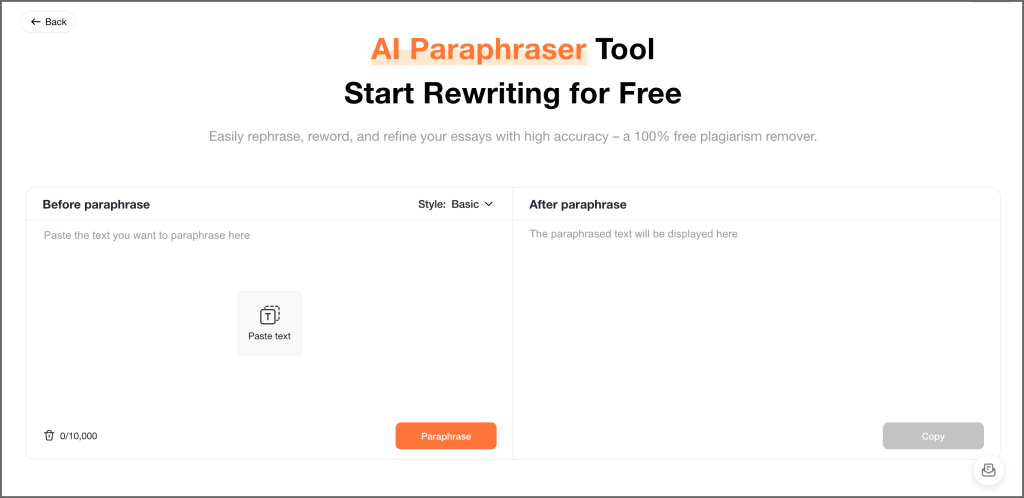
Features:
- Context-aware paraphrasing
- Multiple rewriting styles
- Preserves original meaning
- Academic essay writing
Best for:
- Professionals or students who need accurate, context-sensitive rephrasing.
2. QuillBot
A popular paraphrasing tool that offers multiple modes from conservative rewrites to more creative variations of your text.
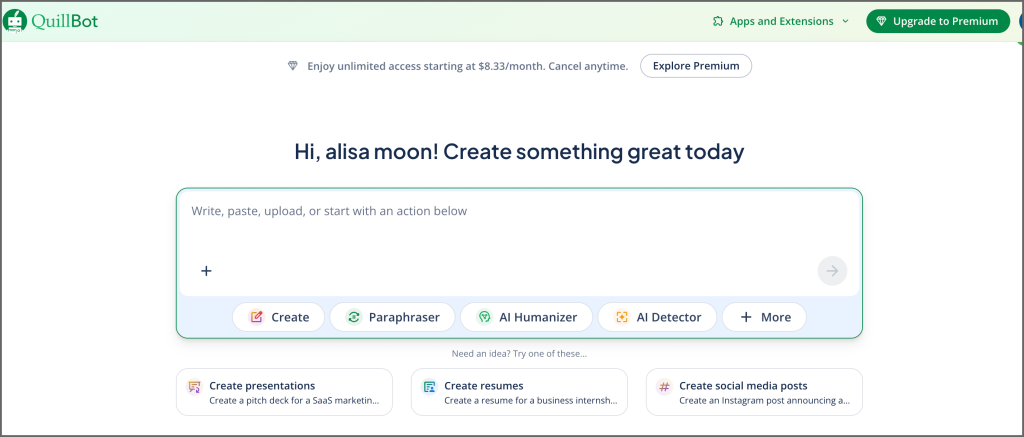
Features:
- Multiple paraphrasing modes
- Word flipper feature
- Free and premium options
Best for: Writers looking for flexibility and quick, varied rewording options.
3. Grammarly
While primarily known for grammar checking, Grammarly also offers rewriting suggestions that can help with paraphrasing.
Features:
- Integrated writing assistant
- Suggestions for clarity
- Works across platforms
Best for: Users who want both grammar support and improved sentence structure.
4. Wordtune
An AI-powered writing assistant that focuses on improving sentence flow and readability.

Features:
- Multiple ways to express the same idea
- Enhances clarity and tone
- Real-time suggestions while writing
Best for: Anyone aiming to refine the style and tone of their writing quickly.
A user-friendly tool that generates unique versions of your text while keeping the original meaning intact.
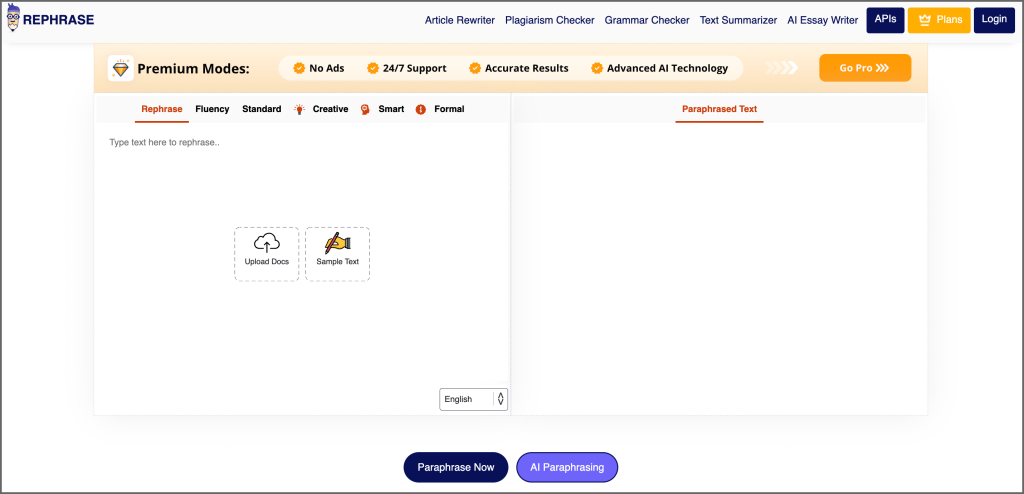
Features:
- Intelligent rephrasing
- Preserves readability and meaning
- Simple, straightforward interface
Best for: Students or content creators needing fast, high-quality rewording.
A free online tool that supports multiple languages for quick text rephrasing.
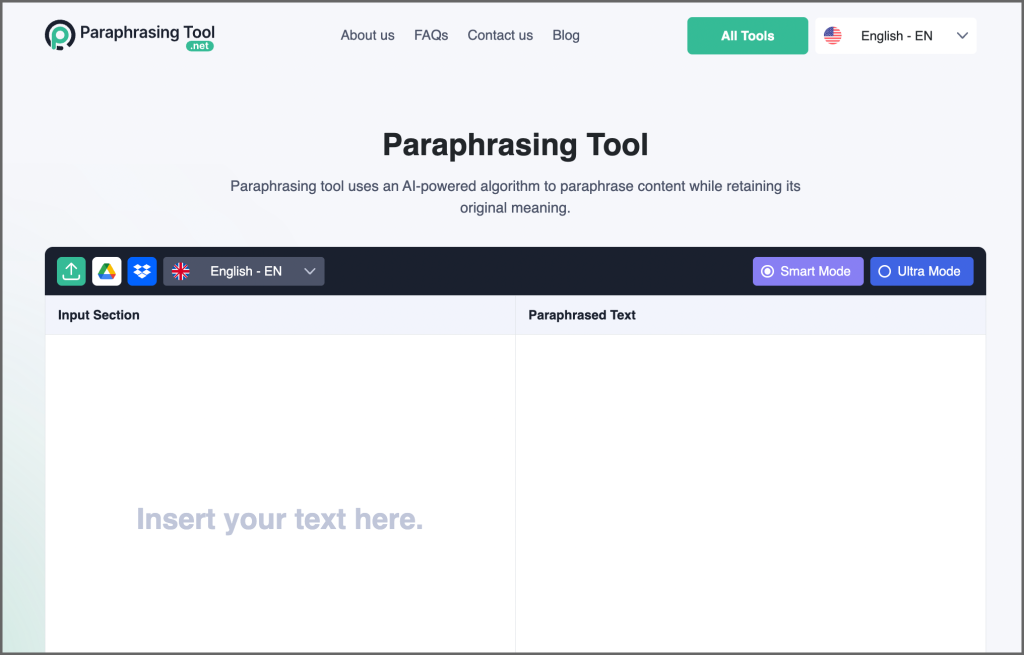
Features:
- No registration required
- Supports several languages
- Easy to use
Best for: Quick, hassle-free rephrasing of small to medium-length text.
Need Help With Oreate AI Paraphrasing Tool?
Try Oreate AI for intelligent, context-aware paraphrasing that maintains the original meaning while creating natural-sounding rewrites.
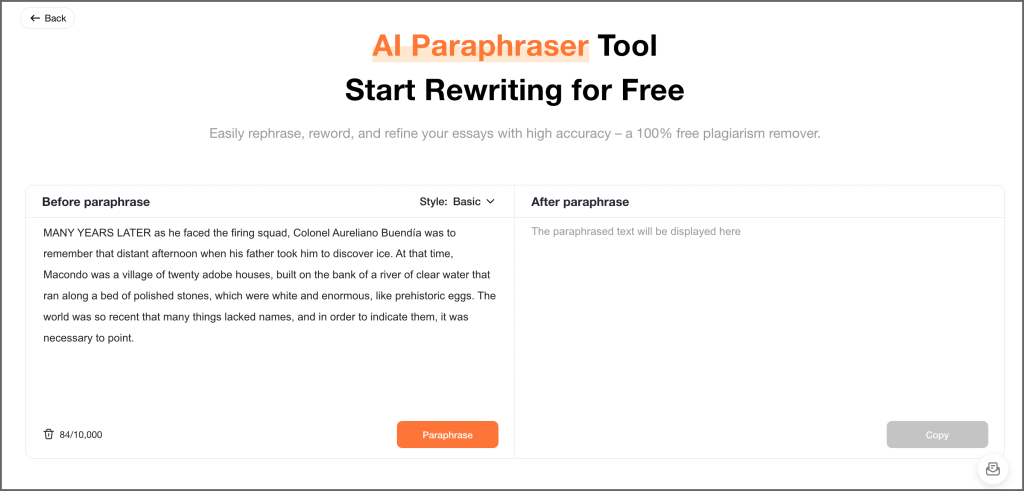
Step 1: Enter Your Original Text
Paste or type the text you want to rephrase into the input box. Ensure your sentences are clear and complete.
Step 2: Choose a Paraphrasing Style
Oreate AI provides 9 rewriting styles. Select the style that best matches your goal.
Step 3: Click “Paraphrase”
Click the Paraphrase button. The AI will generate a rephrased version in seconds.
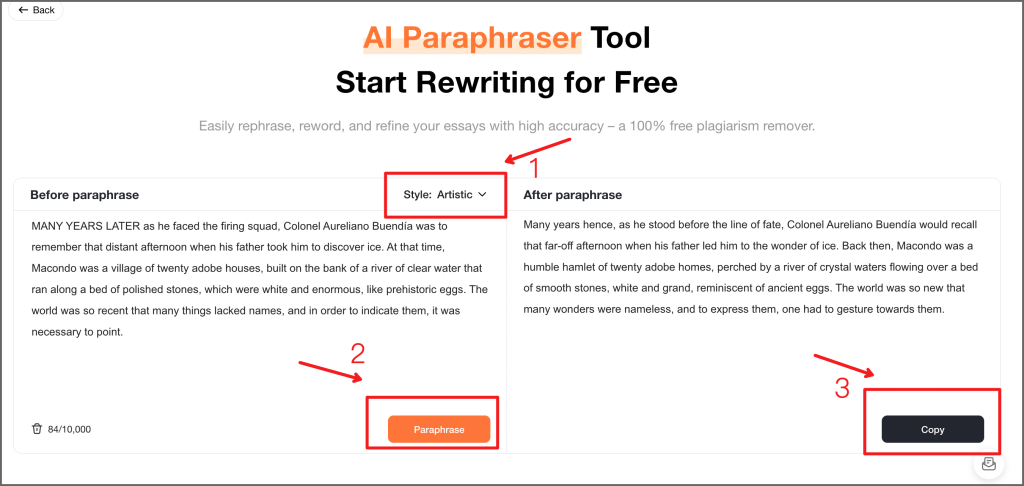
Step 4: Review and Export
Check the output for tone and clarity. Copy the text for use in your content.
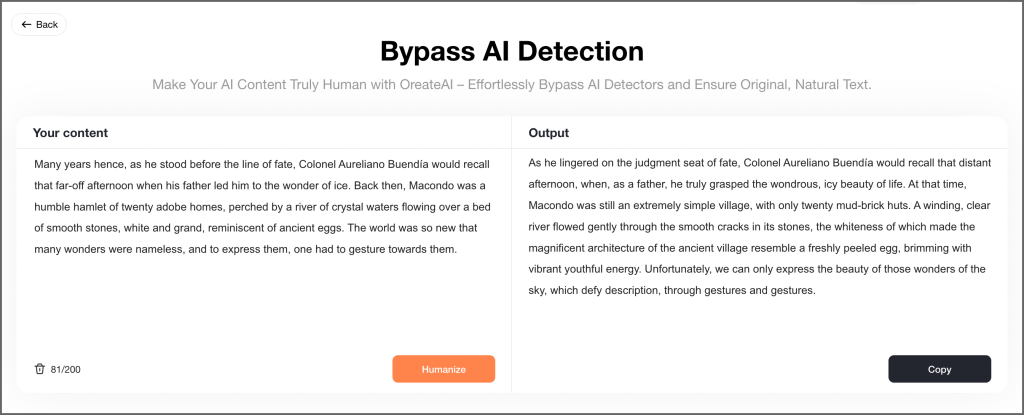
Step 5: Use AI Humanizer (Optional but Recommended)
After paraphrasing, you can make your text sound even more natural with Oreate’s AI Humanizer.
Common Paraphrasing Mistakes
Even with the best intentions, people often make these common mistakes when paraphrasing:
1. Correct Paraphrasing
- Completely rewriting in your own words
- Maintaining the original meaning
- Using different sentence structures
- Including proper citations
- Demonstrating understanding of the material
2. Common Mistakes
- Simply swapping words for synonyms
- Changing only a few words from the original
- Distorting the original meaning
- Forgetting to cite the source
- Using inappropriate synonyms that change meaning
3. Examples of Incorrect vs. Corrected Paraphrasing
|
Original Text |
Incorrect Paraphrase |
Corrected Paraphrase |
|
“Development and pollution in coastal areas have put significant pressure on marine animals, including the endangered sea snail species.” |
“Advancement and contamination in coastal areas have put significant pressure on sea creatures, including the endangered sea snail species inhabiting the vicinity.” |
“The endangered sea snail population is declining largely due to human activities along coastlines, such as construction projects and environmental contamination.” |
|
“The research indicates that students who participate in extracurricular activities tend to perform better academically.” |
“The research shows that pupils who take part in extracurricular activities tend to do better academically.” |
“According to the study, academic achievement is typically higher among students who engage in activities beyond the standard curriculum.” |
Warning: Simply replacing words with synonyms while keeping the same sentence structure is often considered “patchwriting” — a form of plagiarism. Always strive to completely rewrite the information in your own words and sentence structures.
Paraphrasing vs. Quoting vs. Summarizing
Understanding the differences between paraphrasing, quoting, and summarizing helps you choose the right technique for your writing needs:
|
Technique |
Definition |
When to Use |
Length |
Citation Required |
|
Paraphrasing |
Restating someone else’s ideas in your own words while preserving the original meaning |
When you want to integrate source material smoothly into your writing |
Similar to the original |
Yes |
|
Quoting |
Using the exact words from a source, enclosed in quotation marks |
When the original wording is distinctive, authoritative, or precise |
Exact same as the original |
Yes |
|
Summarizing |
Condensing the main ideas from a longer passage into a shorter form |
When you need to present the key points from a lengthy source |
Much shorter than the original |
Yes |
When to Paraphrase?
- When you want to integrate information smoothly
- When the original wording isn’t particularly special
- When you want to demonstrate understanding
- When you need to clarify complex information
When to Quote?
- When the original wording is memorable or distinctive
- When analyzing the author’s language
- When the exact wording provides authority
- When you want to respond to an exact statement
Frequently Asked Questions
1. What is paraphrasing (with examples)?
Paraphrasing is restating someone else’s ideas in your own words while maintaining the original meaning. For example:
Original: “Regular exercise has been shown to reduce stress levels and improve overall mental health.”
Paraphrased: “Studies indicate that engaging in physical activity on a consistent basis can lower anxiety and enhance psychological well-being.”
Notice how the paraphrase uses different words and sentence structure while preserving the core meaning of the original statement.
2. How do I paraphrase without plagiarizing?
To paraphrase without plagiarizing:
- Thoroughly understand the original text before attempting to paraphrase
- Use your own words and sentence structure completely
- Don’t just swap a few words for synonyms—truly rewrite the content
- Compare your paraphrase with the original to ensure you’ve made significant changes
- Always cite the source of the ideas, even when using your own words
- Consider using a plagiarism checker to verify your work
3. What’s the difference between paraphrasing and summarizing?
The main differences between paraphrasing and summarizing are:
- Length: Paraphrasing typically results in text of similar length to the original, while summarizing condenses the content significantly.
- Scope: Paraphrasing often focuses on specific passages or sentences, while summarizing covers broader content like entire articles or chapters.
- Detail: Paraphrasing retains most details from the original, while summarizing includes only the main points.
- Purpose: Paraphrasing is used to integrate specific information into your writing, while summarizing helps present an overview of longer content.
Both techniques require citation of the original source.
4. Can I use AI tools for paraphrasing in academic writing?
Yes! AI paraphrasing tools can be helpful starting points, but they should be used with caution in academic writing:
- Always review and edit AI-generated paraphrases to ensure accuracy and proper meaning
- Check your institution’s policies regarding AI writing tools
- Use AI tools as assistants rather than replacements for your own understanding
- Never submit AI-generated content without thorough review and editing
- Always cite your sources properly, regardless of how you paraphrase
The careful review and editing are required to ensure the paraphrase accurately reflects the original meaning and fits your writing style.
Conclusion
Mastering the art of paraphrasing is essential for effective academic and professional writing. By restating ideas in your own words while preserving the original meaning, you demonstrate your understanding of the source material and integrate information smoothly into your work. Remember that effective paraphrasing requires more than just swapping words for synonyms—it involves restructuring sentences and truly reformulating the ideas.
Always cite your sources when paraphrasing to avoid plagiarism, even though you’ve used your own words. With practice and the right techniques, you can become skilled at paraphrasing, enhancing both the quality and integrity of your writing.
Struggling with Paraphrasing?
Try Oreate AI paraphraser to help you create accurate, natural-sounding paraphrases that maintain the original meaning while using your own words!