Struggling with math problems, but don’t know what the best AI for math is? Most AI tools today can solve basic to advanced math problems, but each tool has its unique power move. So, different AI math solver tools perform better in different conditions.
We tried a list of AI math tools and picked the top 5 AI for math help to use in 2026. Learn which AI math tool is the best for various use cases and sharpen your math skills to stay ahead of your competition.
What Is the Best AI for Math?
There is no one-size-fits-all tool when it comes to AI math solver tools. So, giving a straightforward answer to the question, “What is the best AI for math?” is tricky.
The answer depends on your needs. Here are some example use cases.
● Homework Solving Tool: You might need an instant answer to math problems for your daily homework.
● Step-by-Step Solving Tool: Some math problems require step-by-step explanations besides the solution.
● Advanced Math Solving Tool: Solving complex math problems for learning or research requires advanced AI tools.
You must pick the right AI math help tool based on your needs. Otherwise, you might not get the necessary help or have to work more to get the right solution.
Top Five AI Math Tools Reviewed
We have gone through most of the AI math tools available out there and tested them against a set of criteria. Here is a sneak peek into the performance of the top 5 AI math tools and where they perform the best.
1. Wolfram Alpha
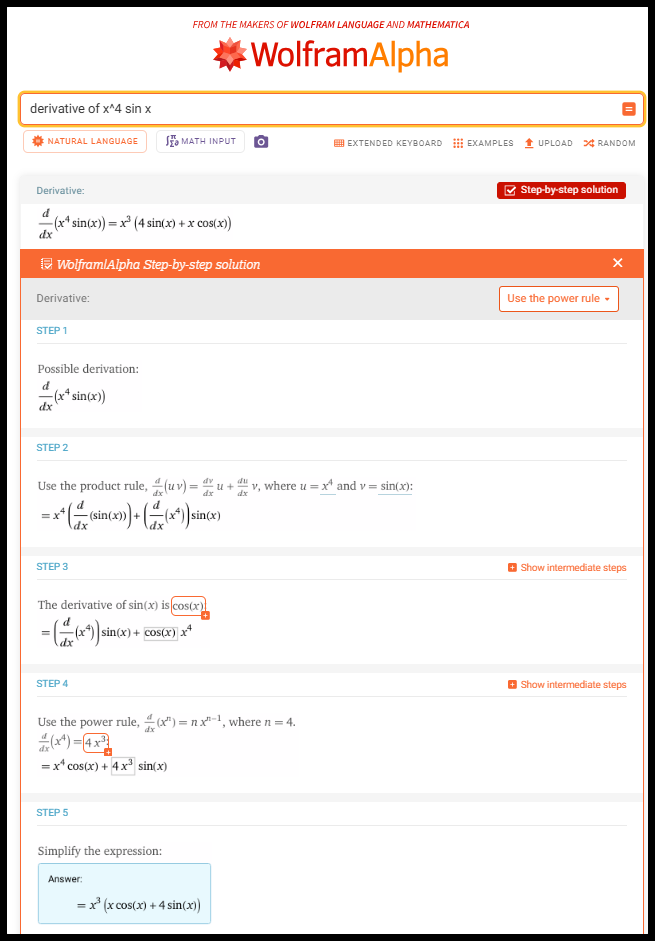
Wolfram Alpha sets the benchmark for other AI math solver tools. It supports symbolic math, which sets it apart from standard LLMs. It also has a massive knowledge base, great for calculus, engineering, and high-level physics problems.
Key Features
Instead of providing direct answers to math problems, this AI math help tool gives step-by-step derivations. This is why university students, researchers, and professionals find this tool extremely effective.
Besides regular math problems like arithmetic, algebra, or geometry, Wolfram Alpha also provides solutions for everyday problems like personal finance, household science, food & nutrition, etc.
- Best for: Accuracy and Advanced Math
- Limitations: Not exactly conversational type, like ChatGPT.
2. ChatGPT
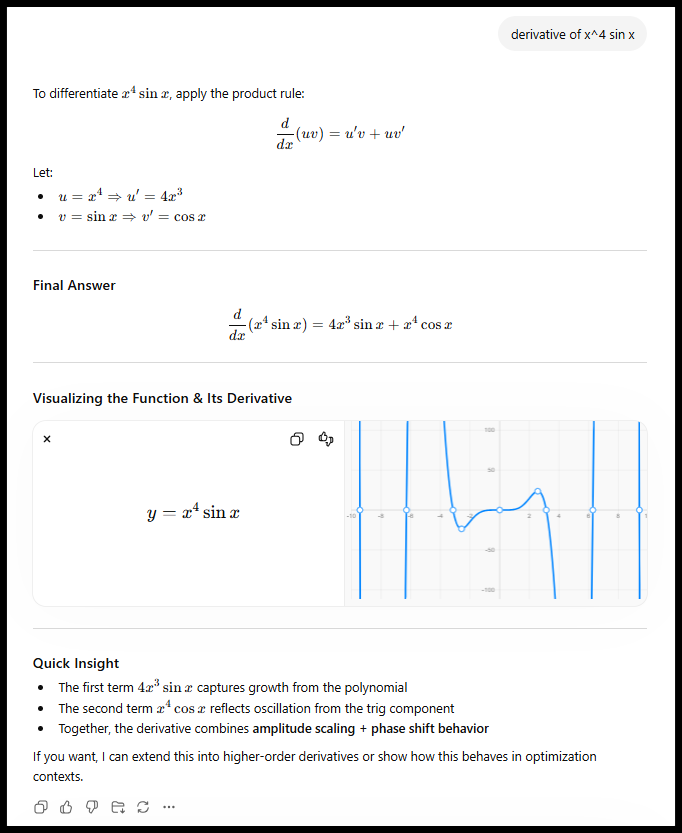
It is probably one of the most commonly used AI math tools because of its conversational interface. Don’t get fooled by its user-friendly interface and tone; it can solve advanced math problems and provide step-by-step explanations with clear reasoning.
The latest reasoning models of ChatGPT are really good at explaining math problems in plain words, so it is highly popular among school and college students.
Key Features
This AI math solver tool can take problems in text prompts. Still, the tool can provide accurate solutions and clear explanations of most of the problems.
As it has conversational memory, the tool can remember your learning style and apply your preferences every time you come back with a different problem.
- Best for: Math Reasoning and Conceptual Explanation
- Limitations: The explanation of a math problem often depends on how good the prompt is. If you aren’t good at prompting, you might not get an easy-to-understand solution from ChatGPT.
3. Oreate AI Tutor
Oreate AI Tutor is a part of a larger ecosystem containing multiple AI tools for learning and research. The AI Tutor platform uses a combination of modern LLMs and a structured approach.
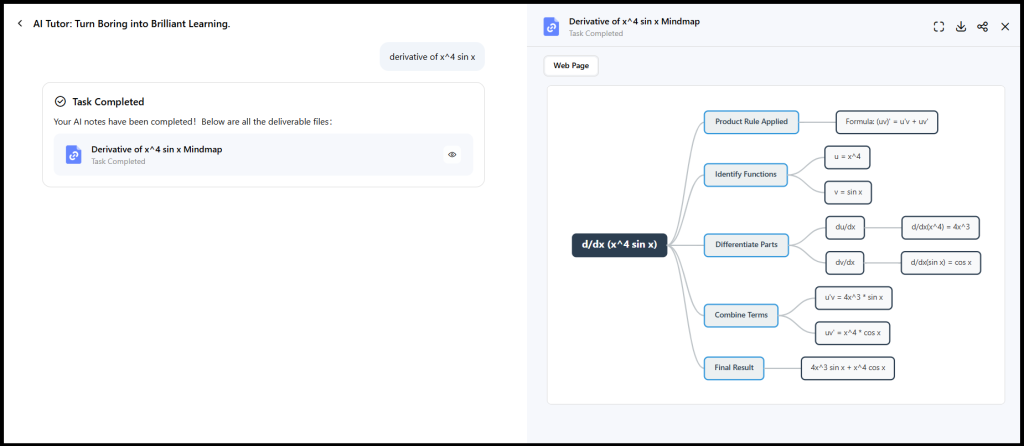
Even if you enter a simple prompt, this AI math tool can turn it into a step-by-step solution. So, you can use it for simple tasks like daily homework and complex tasks like advanced math or research at the same time.
Key Features
The best part of Oreate AI Tutor is its capability to turn any problems into mindmaps, infographics, flashcards, and quizzes. This way, you can understand the solution much faster than traditional AI math help tools.
Another good thing about Oreate AI Tutor is its integration with AI research and AI writing tools. No math problem is boring anymore if you are using Oreate AI.
- Best for: All-in-One Learning and Research
- Limitations: Oreate AI Tutor isn’t as capable for advanced math as tools like Wolfram Alpha yet. But it is great for day-to-day math problems.
4. Photomath
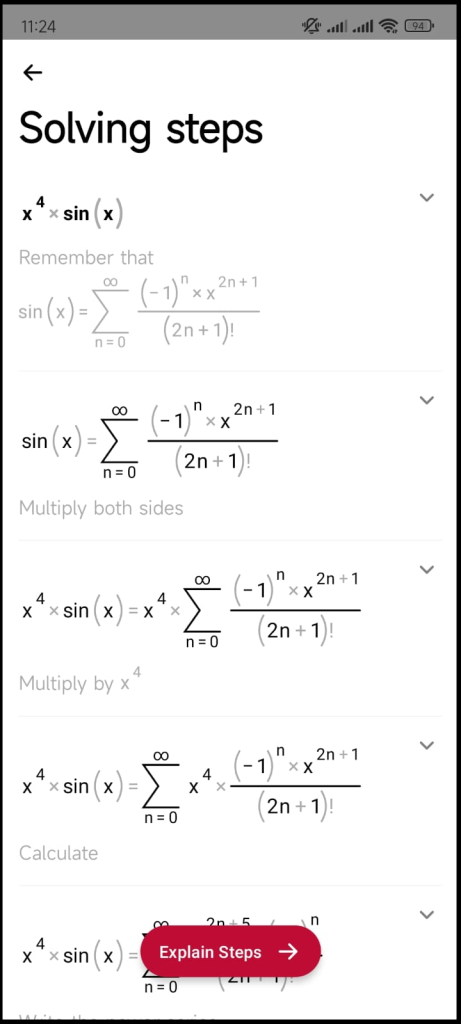
Find it hard to type your math problems into the chatbox? No worries, Photomath can take a picture of your math problems and provide quick solutions. This tool is popular for its OCR (Optical Character Recognition) feature that can scan math problems and provide step-by-step solutions.
From elementary to college-level math problems, you can solve almost anything with Photomath.
Key Features
The accessibility of Photomath is unmatched. You just need to point the mobile camera at a printed or handwritten math problem. The Photomath app instantly delivers the solution and can also explain the solution in steps.
- Best for: Simple, Handwritten Math
- Limitations: Photomath may not be as good as Oreate AI Tutor or ChatGPT in conversational solutions or explaining concepts.
5. Symbolab
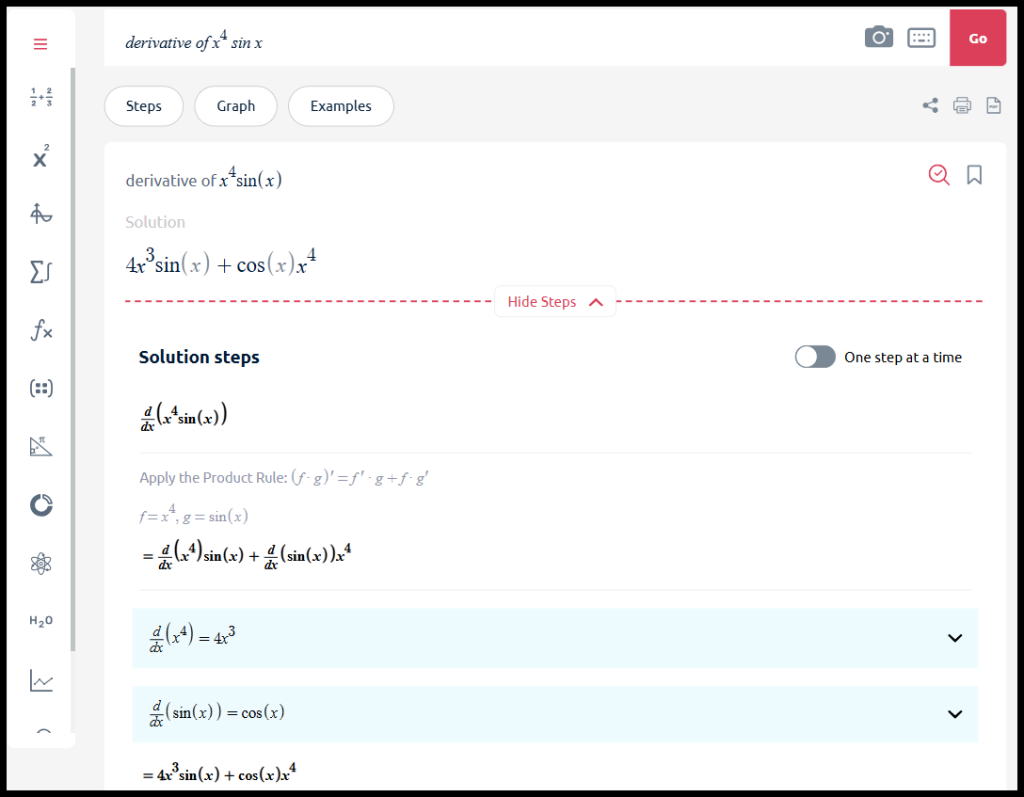
If you have a complex algebra or trigonometry problem, Symbolab is the tool you turn to, not just because of its high capability but also because of its easy interface. It can take problems through chats as well as photos.
Key Features
Symbolab can provide instant answers to your math problems. At the same time, it provides detailed steps for the solution that you can go through one step at a time.
- Best for: Algebra, Trigonometry, and Calculus
- Limitations: This AI math tool performs better when the problems are written into the chat rather than scanned.
How to Use an AI Math Solver: Step-by-Step
Now that you know what the best AI for math is in your case, let’s show you how to solve a problem with an AI math tool. We used Oreate AI Tutor to walk through a real math problem from start to finish, using three of its most powerful features: Infographics, Quiz, and Flashcards.

Here is the problem we used:
- Math Problem: Polynomial Factorization
- Given that the polynomial x² + kx + 6 is factorable and has (x − 2) as one of its factors, find the following when x = 3:
(1) Determine the value of the polynomial x² + kx + 6.
(2) Find the value of k.
Step 1: Visualize the Problem with Infographics
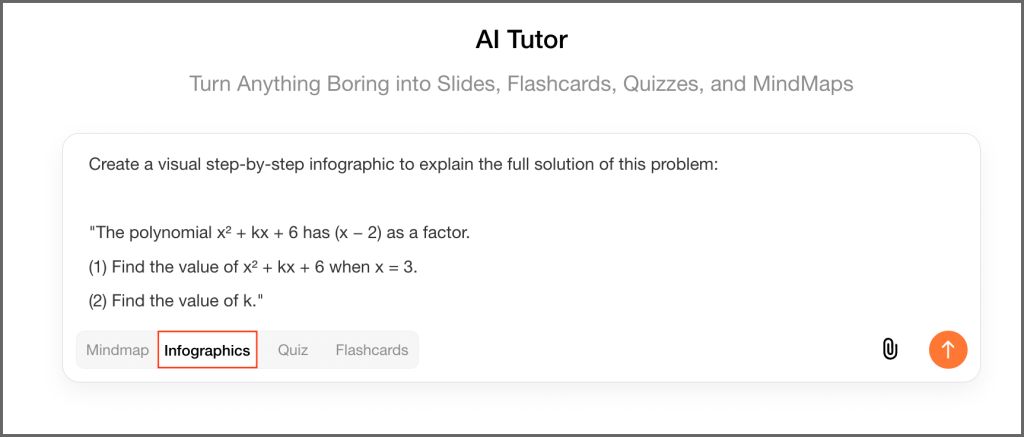
The first thing you want to do when you land on a tricky math problem is understand the structure before jumping into the numbers. That’s exactly what the Infographics and mindmap feature of Oreate AI Tutor is built for.
- Enter your problem into Oreate AI Tutor and select the Infographics option. The tool instantly breaks down the problem into a color-coded, visual flowchart, with no confusing formulas thrown at you all at once.
What You Get:
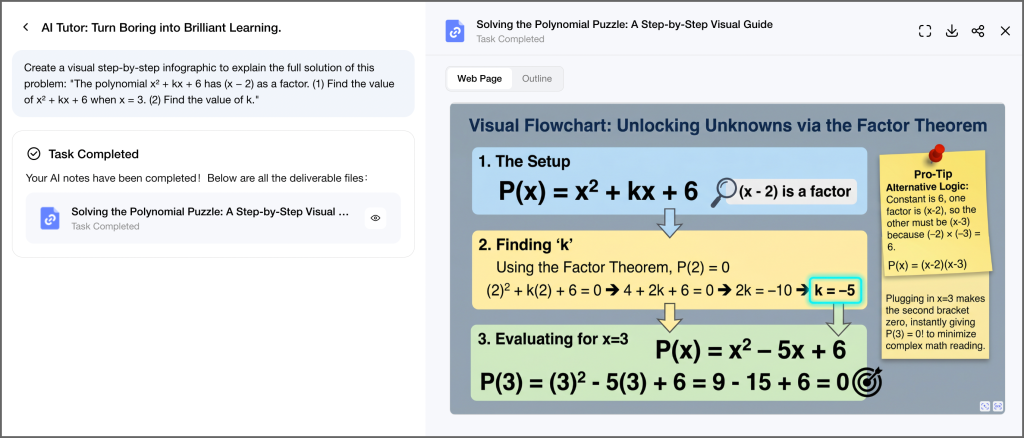
For our polynomial problem, the infographic laid out three clean steps:
- The Setup — shows P(x) = x² + kx + 6 with (x − 2) highlighted as the known factor.
- Finding k — applies the Factor Theorem (P(2) = 0), walks through the substitution step-by-step, and boxes the final answer: k = −5.
- Evaluating at x = 3 — rewrites the polynomial as x² − 5x + 6, then shows P(3) = 9 − 15 + 6 = 0.
A sticky-note Pro Tip on the side even offers an alternative shortcut: since the constant is 6 and one factor is (x − 2), the other must be (x − 3) — plug in x = 3, and you instantly get zero. That’s the kind of insight that helps students think like mathematicians, not just follow procedures.
Step 2: Test Your Understanding with the Quiz
Once you have seen how the problem is solved, the real question is: do you actually understand it, or are you just following along? That’s where the Quiz feature comes in.
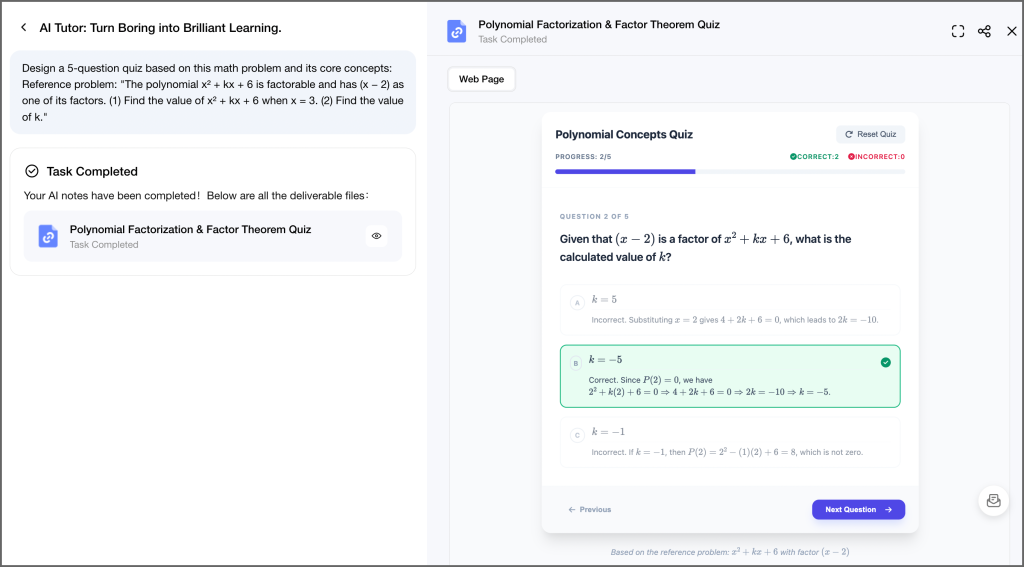
After reviewing the infographic, switch to Quiz mode. Oreate AI Tutor generates targeted questions based on the same problem, testing whether you have truly grasped the concept.
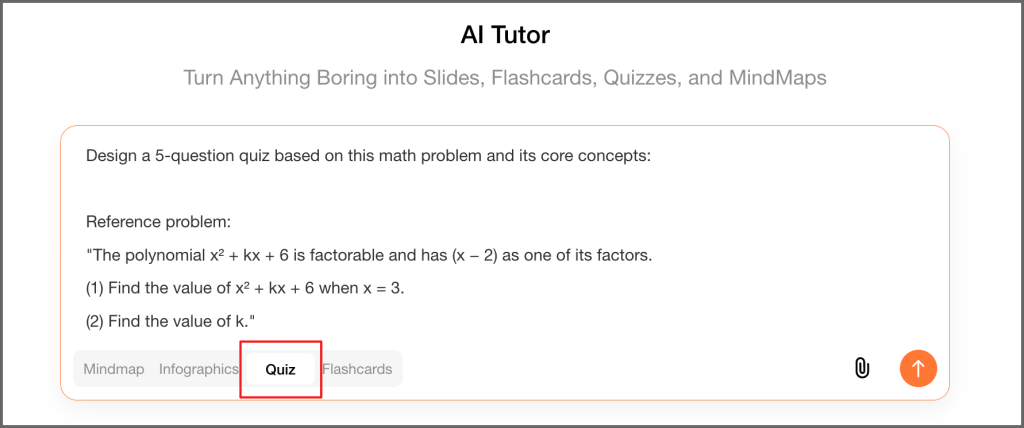
What You Get:
For our polynomial problem, the quiz presented a focused multiple-choice question:
|
Question: Given that (x − 2) is a factor of x² + kx + 6, what is the value of k? A) k = 5 B) k = −5 ✓ C) k = −1 |
Each wrong option comes with a clear explanation of exactly why it is incorrect, not just a red mark. This kind of feedback teaches students where their thinking went wrong, which is far more valuable than just seeing the right answer.
Step 3: Lock In the Learning with Flashcards
You understand the problem, and you have tested yourself. Now it’s time to make the knowledge stick. The Flashcards feature takes the core concepts from your problem and turns them into a portable study deck you can revisit any time.
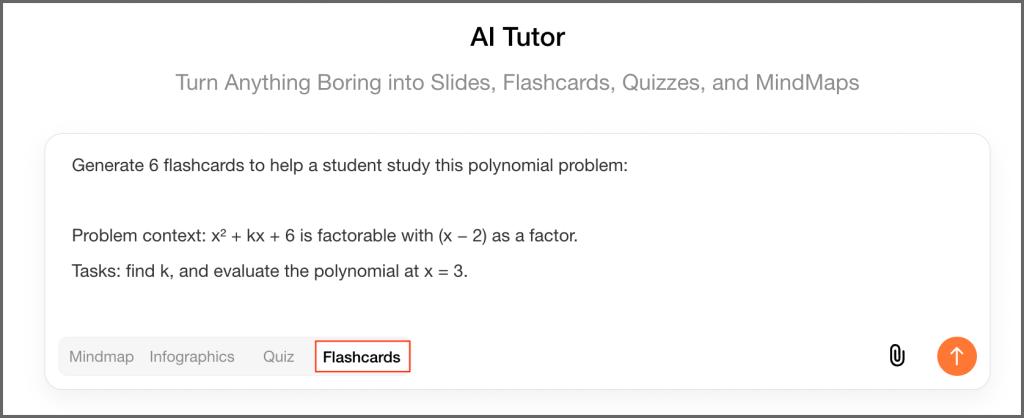
Select Flashcards from the Oreate AI Tutor menu. The tool automatically generates a set of cards based on the polynomial problem, covering everything from the definition of a factor to the final evaluated answer.
What You Get
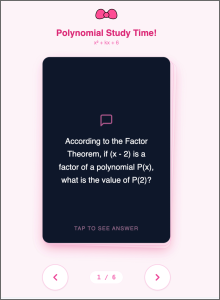

Each card has a clearly stated question on the front and a precise answer on the back.
Putting It All Together
The real power of Oreate AI Tutor isn’t any single feature but the learning loop that all features create together.
Most AI math tools stop at giving you the answer. Oreate AI Tutor takes you from confusion to confidence with one feature at a time. Try it on your next math problem and see the difference for yourself.
How to Pick the Right AI Math Tool for Your Needs?
Choosing what is the best AI for math depends on your academic level, understanding, and the specific math problem.
1. For Easy Math and Instant Solution: You can use simple tools like Photomath, Oreate AI Tutor, or Symbolab for this type of math problem.
2. For Mid-Level Math with Explanations: Oreate AI Tutor or ChatGPT can be useful for mid-level math problems.
3. For Advanced Math Solutions and Research: Wolfram Alpha should be your go-to option for advanced math and research work.
Conclusion
AI tools have evolved so much that solving complex math isn’t a big deal anymore. A more important question is, “What is the best AI for math?” because you need to pick the right AI math tool for your situation to get effective and quick answers.
We reviewed AI math help tools to pick the top 5 so that you can use whatever suits your case. From simple, elementary math to advanced math and physics problems, you can solve everything with these tools.
Just pick the right one depending on your needs!