In this article, we’ll dive deep into study tips for different groups of learners, various scenarios, and purposes. We’ll also introduce modern tools like Oreate AI to help boost your efficiency.
To know Oreate AI, further read: What Is Oreate AI: A Complete Guide
Study Tips for Different Groups
1. Study Tips for College Students
(1) Manage Your Time with a Detailed Schedule

Time management is one of the biggest challenges for college students because of multiple overlapping responsibilities such as lectures, assignments, group projects, and part-time work. A good strategy is to plan your week in advance, breaking each day into smaller blocks of time for specific tasks.
-
Plan your weekly schedule every Sunday to stay organized.
-
-
Avoid overloading any single day by balancing study sessions with breaks and leisure.
(2) Apply Active Recall and Spaced Repetition

-
Use flashcards or self-made quizzes for challenging topics.
-
Schedule reviews in short but regular intervals rather than marathon study sessions.
-
Focus on explaining answers aloud to reinforce understanding.
(3) Leverage the Power of Study Groups
Study groups are a great way to learn from your peers, clarify doubts, and test your understanding by explaining concepts to others. When you teach a topic to someone else, you are forced to break it down into simple terms, which solidifies your own comprehension.
-
Keep group sizes small (3–5 members) to maintain focus.
-
Assign specific topics to each member and rotate the teaching role.
-
Set a time limit for each meeting to prevent distractions.
(4) Use Campus Resources and Online Tools
Most colleges offer free academic support services, but many students fail to take advantage of them. The writing center can review your essays and provide guidance on improving your argument structure and grammar. Similarly, library staff can help you navigate research databases like JSTOR or ScienceDirect, saving you time on finding credible sources.
-
Visit your campus writing center for essay feedback.
-
Use digital library databases for research and referencing.
-
Explore online communities or workshops for additional guidance.
2. Study Tips for High School Students
(1) Create a Distraction-Free Study Environment
High school students often find it hard to stay focused because of constant digital distractions like social media, notifications, and games. The first step toward effective studying is to build a clean, quiet, and distraction-free space.
-
Keep only the materials you need (books, notes, pens) on your desk.
-
Use background music or white noise if it helps you stay focused.
(2) Master Structured Note-Taking
Taking notes is not just about copying what’s on the board—it’s about processing and organizing information so that it’s easier to review later. Techniques like the Cornell Method, outlining, or mind mapping help break complex topics into digestible chunks.
-
Use the Cornell note-taking method or create mind maps for visual clarity.
-
Rewrite class notes at home to reinforce retention.
-
Use color-coding to differentiate between definitions, formulas, and examples.
(3) Break Large Tasks into Smaller Goals
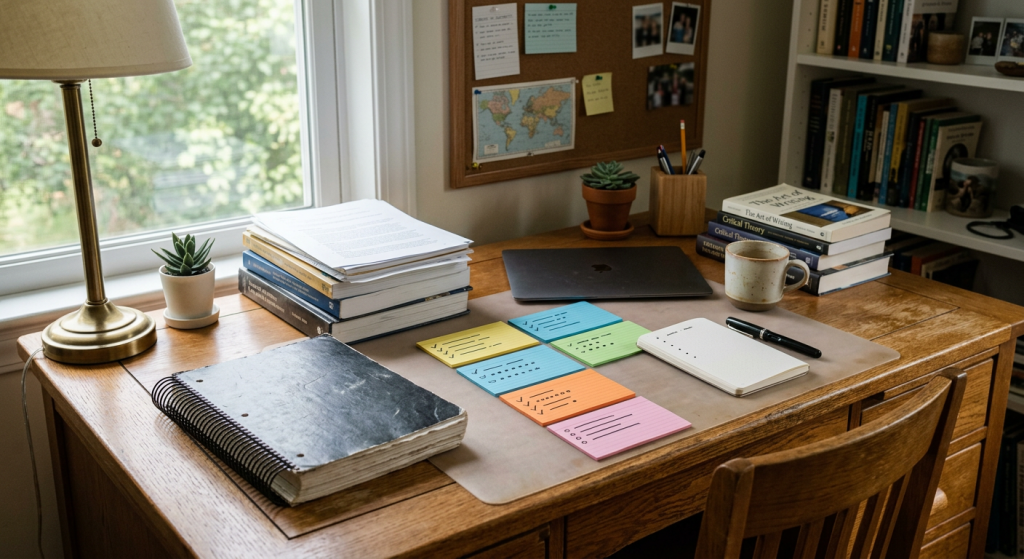
A common mistake among high school students is trying to tackle a massive assignment or chapter in one sitting. Instead, break it down into smaller, manageable goals that can be accomplished in short study sessions.
-
Create a checklist of small, specific tasks for each subject.
-
Reward yourself after completing each mini-goal to stay motivated.
-
Alternate between subjects to avoid burnout and keep studying fresh.
(4) Review Material Every Day
Instead of cramming all your study sessions into the weekend, dedicate 15–30 minutes each day to reviewing what you learned in class. Daily reviews keep the material fresh in your mind and help transfer information from short-term memory to long-term memory.
-
Review notes for 15–30 minutes after school each day.
-
Use quick flashcards or summaries for active revision.
-
Highlight key terms and formulas for fast pre-exam reviews.
3. Study Tips for Postgraduate Students
(1) Develop a Clear and Realistic Research Plan

Graduate studies require juggling multiple responsibilities, and having a well-structured research plan is essential for success. Begin by breaking down your long-term goals into smaller, manageable tasks with specific deadlines.
-
Set weekly and monthly goals aligned with your overall research objectives.
-
Prioritize tasks to focus on high-impact activities first.
-
Schedule regular check-ins to evaluate progress and make adjustments.
-
(2) Maintain Open and Frequent Communication with Your Supervisor
Your supervisor plays a crucial role in guiding your academic journey, so maintaining clear and consistent communication is vital. Regular meetings allow you to share updates, clarify doubts, and receive constructive feedback, preventing misunderstandings or wasted effort. Don’t hesitate to prepare questions or topics in advance to make the most of these sessions.
-
Schedule regular meetings and prepare discussion points ahead of time.
-
Be open about challenges and seek advice early.
-
Participate actively in seminars, workshops, and study groups.
-
Build relationships with peers for collaboration and mutual support.
(3) Master Efficient Reading and Note-Taking Strategies
-
Skim for key ideas before detailed reading to save time.
-
Use digital tools for annotation and note organization.
-
Summarize important points in your own words for better understanding.
-
(4) Prioritize Your Physical and Mental Well-being

The demands of postgraduate studies can be intense, making it easy to neglect your health, which ultimately hampers productivity and creativity. Establish a routine that balances work with adequate rest, nutrition, and physical activity. Taking regular breaks during study sessions helps maintain focus and prevents burnout, which can be one of the most effective tips for studying.
-
Aim for 7-8 hours of quality sleep each night.
-
Incorporate regular exercise such as walking, yoga, or sports.
-
Take short breaks every hour during study to refresh your mind.
-
Allocate time for hobbies, socializing, and relaxation.
Study Tips for Different Scenarios
1. Study Tips for Exam Preparation
(1) Create a Structured Study Schedule
Effective exam preparation begins with a well-organized study timetable. Break down your syllabus into manageable sections and allocate specific time slots for each topic based on its difficulty and importance. Planning ahead reduces last-minute cramming and helps you maintain a consistent study rhythm.
-
Divide your syllabus into daily or weekly study goals.
-
Prioritize challenging topics and revisit them frequently.
-
Use tools like planners or digital calendars to track your schedule.
-
Schedule regular breaks to maintain focus and prevent fatigue.
(2) Use Active Learning Techniques
Passive reading is often ineffective for exams, so engage actively with the material to deepen your understanding and retention. Techniques like summarizing concepts in your own words, teaching the content to someone else, or creating flashcards can significantly improve memory.
-
Summarize key points aloud or in writing.
-
Teach concepts to peers or yourself to reinforce understanding.
-
Create and review flashcards regularly.
-
Practice with previous exam papers under timed conditions.
2. Study Tips for Self-Improvement
(1) Set Specific and Measurable Goals

-
Define precise targets with deadlines.
-
Break big goals into smaller, achievable steps.
-
Monitor your progress weekly or monthly.
-
Adjust goals based on your performance and changing priorities.
(2) Cultivate a Growth Mindset
-
Embrace challenges as chances to learn and grow.
-
Reflect regularly on your learning experiences.
-
Celebrate effort and progress, not just outcomes.
-
Replace negative self-talk with positive affirmations.
(3) Develop Consistent Learning Habits

-
Establish regular study or practice times.
-
Start with manageable sessions to build momentum.
-
Use reminders or alarms to maintain a routine.
-
Track your habits to identify patterns and stay accountable.
(4) Seek Feedback and Reflect Regularly
-
Ask for feedback from trusted sources frequently.
-
Keep a journal to reflect on your learning journey.
-
Analyze what works and what needs improvement.
-
Use insights to set new goals and improve your methods.
3. Study Tips for Hobby or Interest Development
(1) Set Realistic and Enjoyable Goals
-
Define simple, achievable goals related to your hobby.
-
Focus on enjoying the process rather than just the outcome.
-
Celebrate small successes to stay motivated.
-
Adjust your goals to keep them engaging and fun.
(2) Create a Consistent Practice Routine

-
Schedule regular practice sessions that fit your lifestyle.
-
Start with manageable time blocks to avoid burnout.
-
Use reminders or alarms to maintain consistency.
-
Track your progress to stay motivated and see improvement.
(3) Learn from Multiple Sources
-
Use diverse learning materials like videos, articles, all-in-one websites like Oreate AI, and books.
-
Join hobbyist forums, clubs, or social media groups.
-
Attend workshops or classes when possible.
-
Seek feedback and advice from experienced practitioners.
(4) Embrace Experimentation and Patience
Hobby development is a journey that often involves trial and error. Don’t be afraid to experiment with different techniques, styles, or approaches—even if it means making mistakes. Patience is essential; progress can be gradual, and setbacks are natural parts of learning. Viewing challenges as opportunities to explore rather than obstacles will keep your enthusiasm alive and foster creativity.
-
Try new methods and ideas without fear of failure.
-
Give yourself permission to make mistakes and learn from them.
-
Celebrate progress, no matter how small or slow.
-
Practice patience and stay curious throughout the journey.
Study Tips for Different Purposes
1. Study Tips to Improve Learning Efficiency
(1) Break Study Sessions into Focused Intervals (Pomodoro Technique)
Long, uninterrupted study periods can lead to fatigue and reduced concentration. Using focused intervals—like 25 minutes of study followed by a 5-minute break—helps maintain high levels of attention and prevents burnout. This well-known learning tip, known as the Pomodoro Technique, encourages sustained productivity while providing regular mental rest. Adjust session lengths based on your concentration span and gradually increase them as your stamina improves.
-
Work in 25- to 30-minute focused blocks.
-
Take short 5-minute breaks between sessions.
-
Use timers or apps to keep track of intervals.
-
After four sessions, take a longer break of 15-30 minutes.
(2) Organize Information Visually

Visual tools such as mind maps, idiagrams, and charts help structure information clearly and reveal relationships between concepts. Organizing material visually leverages the brain’s ability to process images, enhancing comprehension and recall. Creating your own visuals also reinforces learning by requiring you to synthesize and categorize information actively.
This study tip is especially useful for complex subjects with interconnected ideas. Use Oreate AI Tutor to reorganize key information to help you memorize things more quickly.
-
Use mind maps to connect related topics.
-
Draw i or diagrams to simplify processes.
-
Highlight key points with colors or symbols.
-
Combine visuals with concise notes for quick revision.
2. Study Tips to Improve Grades
(1) Understand the Grading Criteria and Course Expectations
Improving your grades starts with a clear understanding of what your instructors expect. Carefully review the syllabus, grading rubrics, and assignment guidelines to know how your work will be evaluated. This insight helps you focus your efforts on the most important components and avoid wasting time on less impactful tasks. When in doubt, don’t hesitate to ask your professors or teaching assistants for clarification to ensure you meet or exceed requirements.
-
Study the syllabus and grading rubrics thoroughly.
-
Prioritize assignments and exams that carry more weight.
-
Seek clarification on expectations and assessment criteria.
-
Align your study efforts with the course objectives.
(2) Manage Your Time and Avoid Procrastination

Time management is crucial to consistently achieving good grades. Break your study schedule into manageable chunks with clear deadlines to avoid last-minute stress. Use planners or digital tools to organize your workload and set reminders. Tackling difficult subjects early in your study sessions, when your energy is highest, improves efficiency. Combating procrastination by starting small tasks immediately helps maintain momentum, which is a great tip for high school students, especially.
-
Plan study sessions well in advance of deadlines.
-
Prioritize challenging topics during peak focus times.
-
Use apps or planners to track assignments and exams.
-
Break tasks into smaller steps to make starting easier.
Frequently Asked Questions
Q1: What are the best study tips for exams?
The best exam tips include starting revision early, practicing past papers, and focusing on active recall. Pairing these with tools like Oreate AI Tutor for summaries can help.
Q2: How can I improve concentration?
Create a quiet study environment, remove distractions, and follow the Pomodoro technique. Sleep, exercise, and proper hydration also boost focus.
Q3: How can I study faster and better?
Active learning—such as teaching concepts to someone else or solving practice questions—is more effective than passive reading. Using AI tools like Oreate AI Essay Writer also speeds up writing tasks.
Q4: How many hours should I study daily?
The optimal time varies by person, but 3-4 focused hours with breaks are more productive than long, unfocused sessions.
Q5: How do I memorize things quickly?
Final Thoughts
Effective studying is not about how many hours you spend with a book but about how strategically you use your time and tools. Whether you’re a high school student, a college freshman, or a postgraduate researcher, these 25+ study tips will help you learn smarter, not harder. By combining traditional methods with modern AI-powered tools like Oreate AI Essay Writer, AI Tutor, and PPT Maker, you can save time, boost productivity, and focus on what truly matters—understanding and applying knowledge.